Is Amalfi Cathedral Worth Visiting?
AN EXPERT GUIDE TO DUOMO DI SANT'ANDREA
Discover what to see, how long to spend, who should visit, ticket tips, and expert Amalfi Coast advice from 40-year luxury travel veteran Angela Hughes.
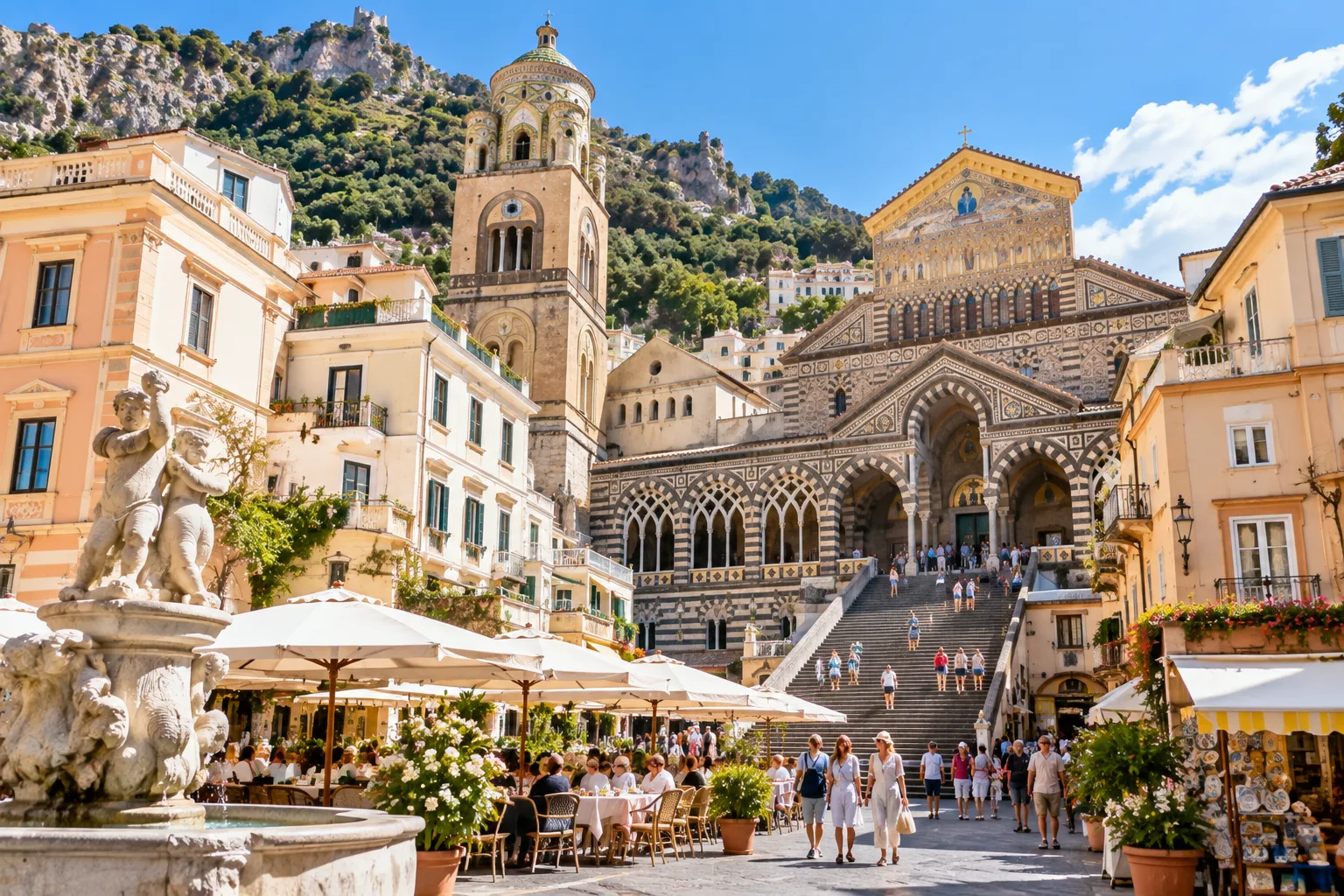
More Than a Pretty Photograph in Piazza Duomo
Yes — Amalfi Cathedral is absolutely worth visiting, especially if you are already spending time in Amalfi. But there is an important distinction: if you simply walk into Piazza Duomo, photograph the famous staircase, and admire the colorful façade, you have experienced only a fraction of what makes this landmark extraordinary.
The true appeal of the Duomo di Sant'Andrea lies in the monumental complex waiting beyond the portal: the peaceful Cloister of Paradise, the 9th-century Basilica of the Crucifix, the Diocesan Museum, and the venerated subterranean crypt housing the sacred relics of St. Andrew the Apostle.
For first-time visitors, exploring the cathedral complex unlocks the remarkable history of Amalfi when it reigned as a Mediterranean maritime superpower, trading directly with Constantinople, Alexandria, and the Levant.
- Monumental Complex: Cathedral, Chiostro del Paradiso, Crypt of St. Andrew, & Diocesan Museum
- Layered Influences: Arab-Norman, Romanesque, Byzantine, Gothic, and Baroque architecture
What Makes Amalfi Cathedral Worth Visiting?
Five defining reasons why going inside enriches your Amalfi Coast vacation far beyond panoramic scenery.
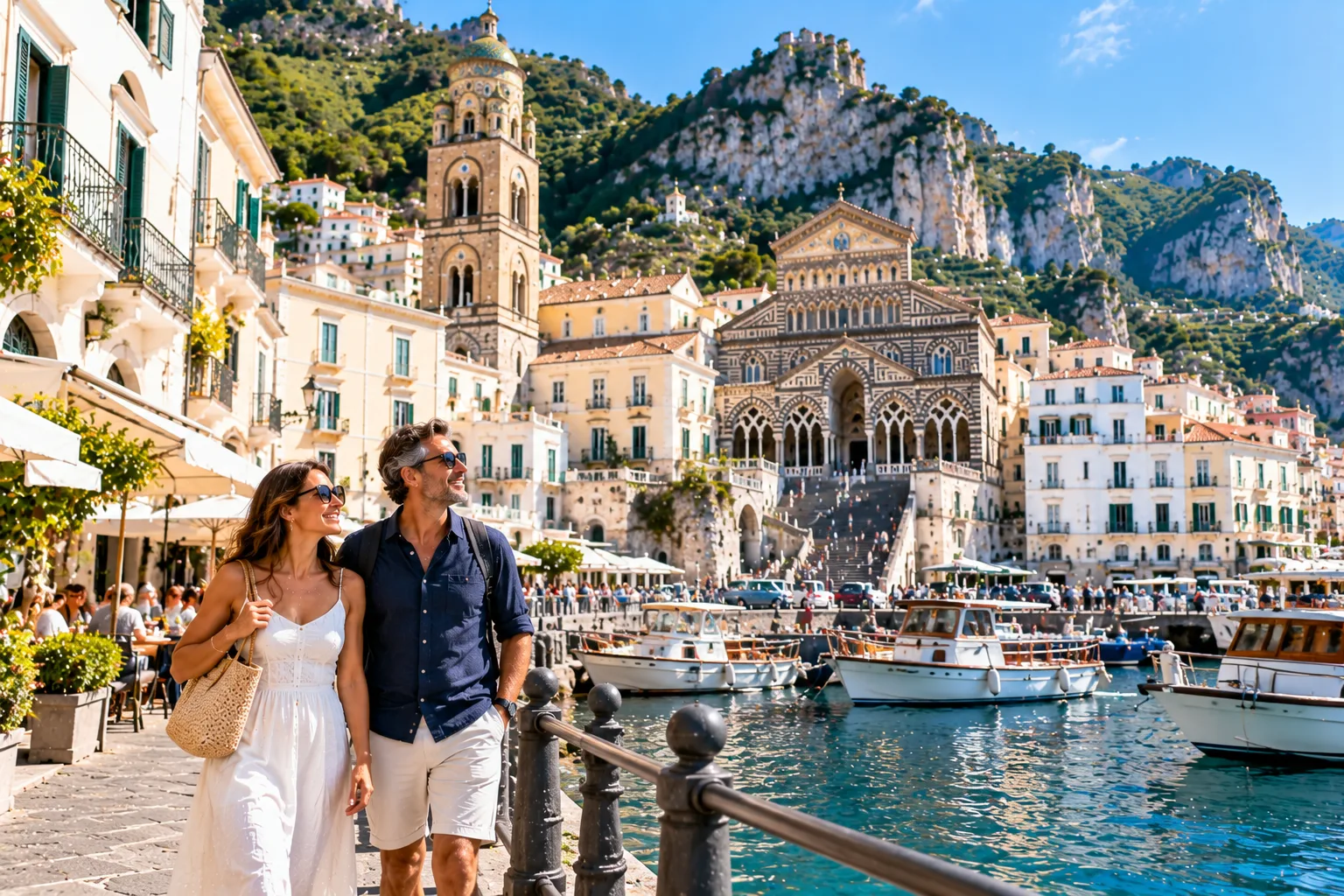
Layered Architecture
A fascinating multi-era synthesis of Romanesque, Byzantine, Arab-Norman, Gothic, and Baroque styles reflecting centuries of Mediterranean maritime trade.
The Crypt of St. Andrew
The spiritual heart of Amalfi, preserving the relics of Apostle Andrew brought from Constantinople in 1208 following the Fourth Crusade.
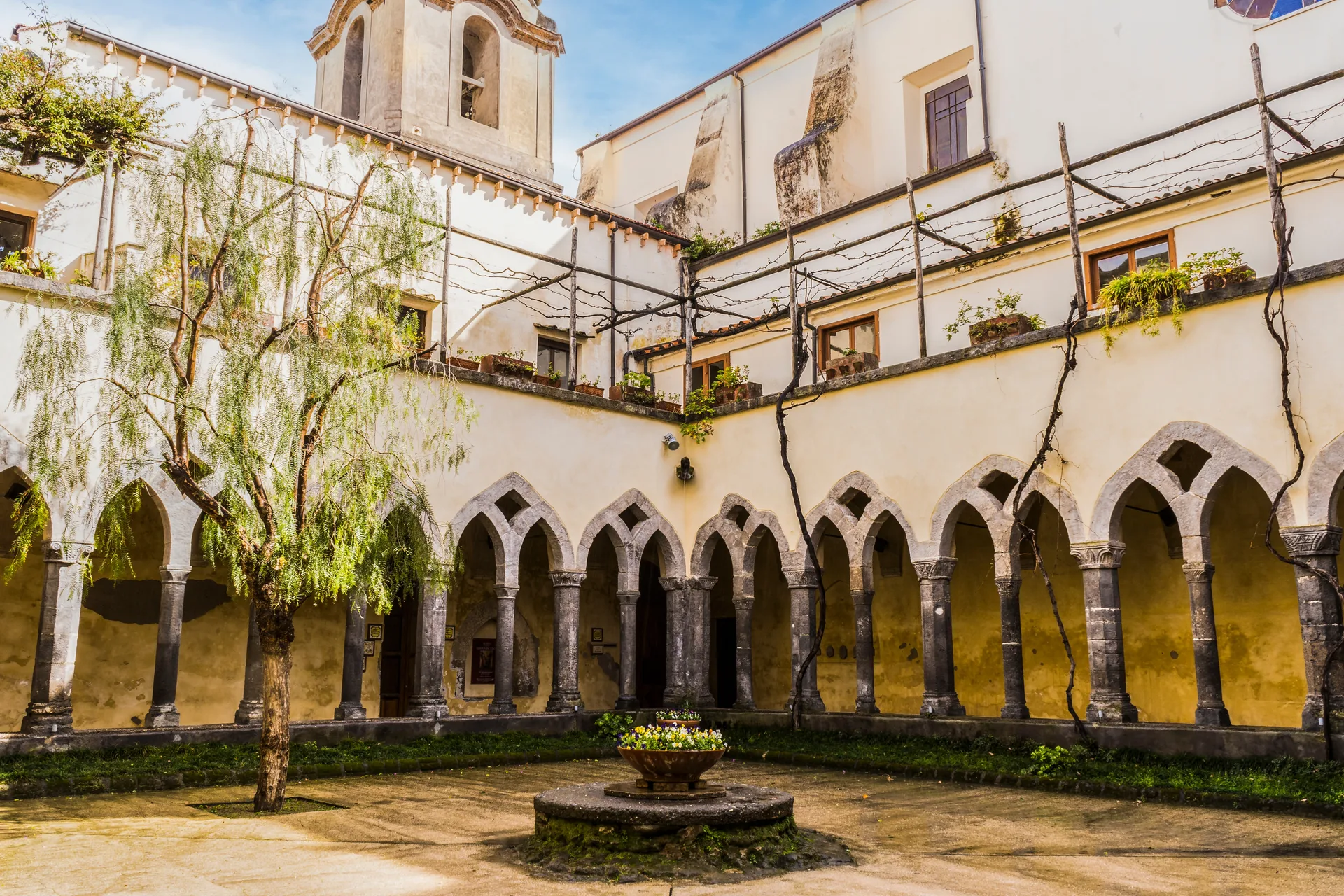
Cloister of Paradise
Constructed in 1266 as an aristocratic burial ground, featuring serene Moorish interlaced arches, delicate marble columns, and a central palm garden.
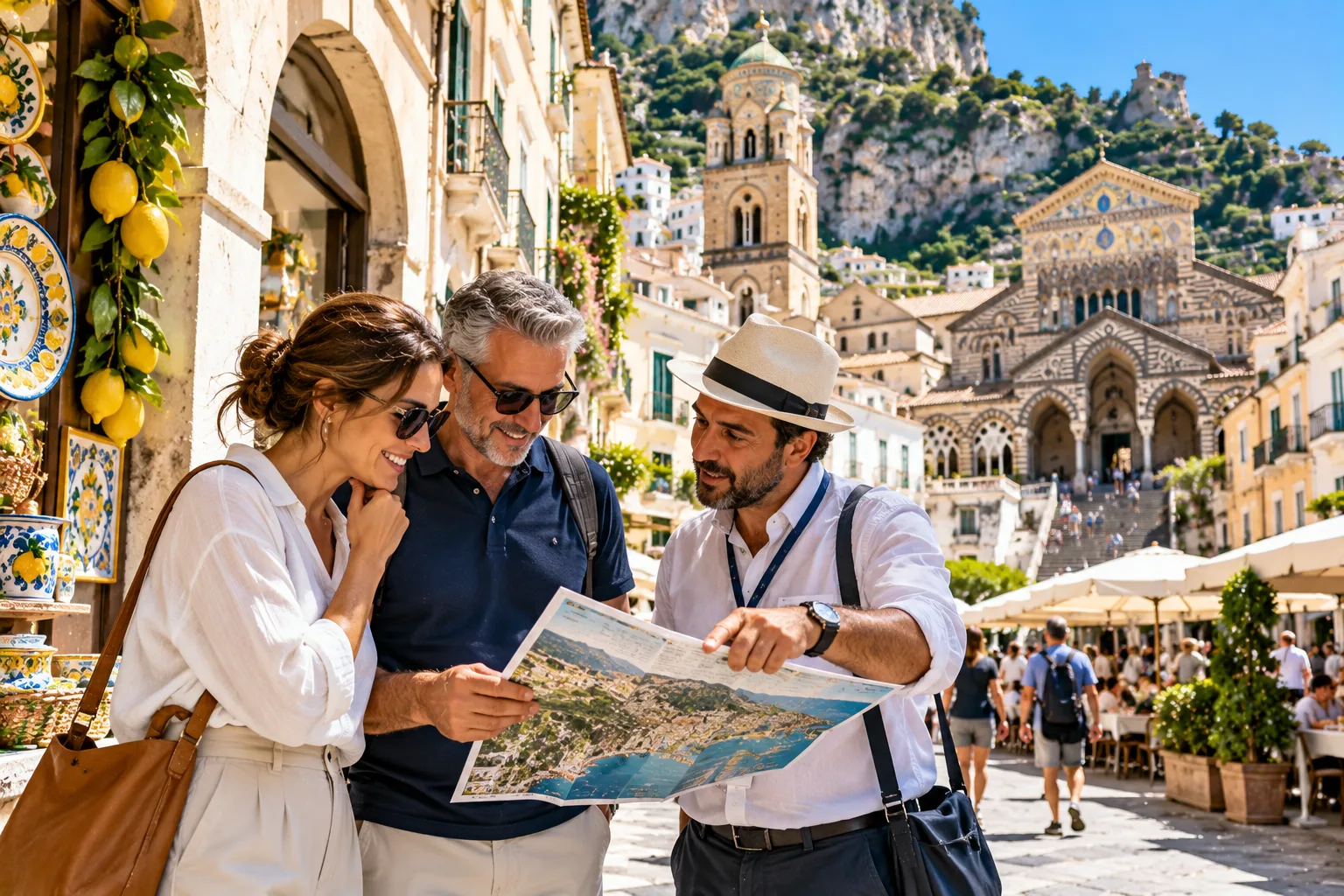
The Diocesan Museum
Housed within the original 9th-century Basilica of the Crucifix, displaying medieval frescoes, episcopal treasures, and Roman-era sarcophagi.
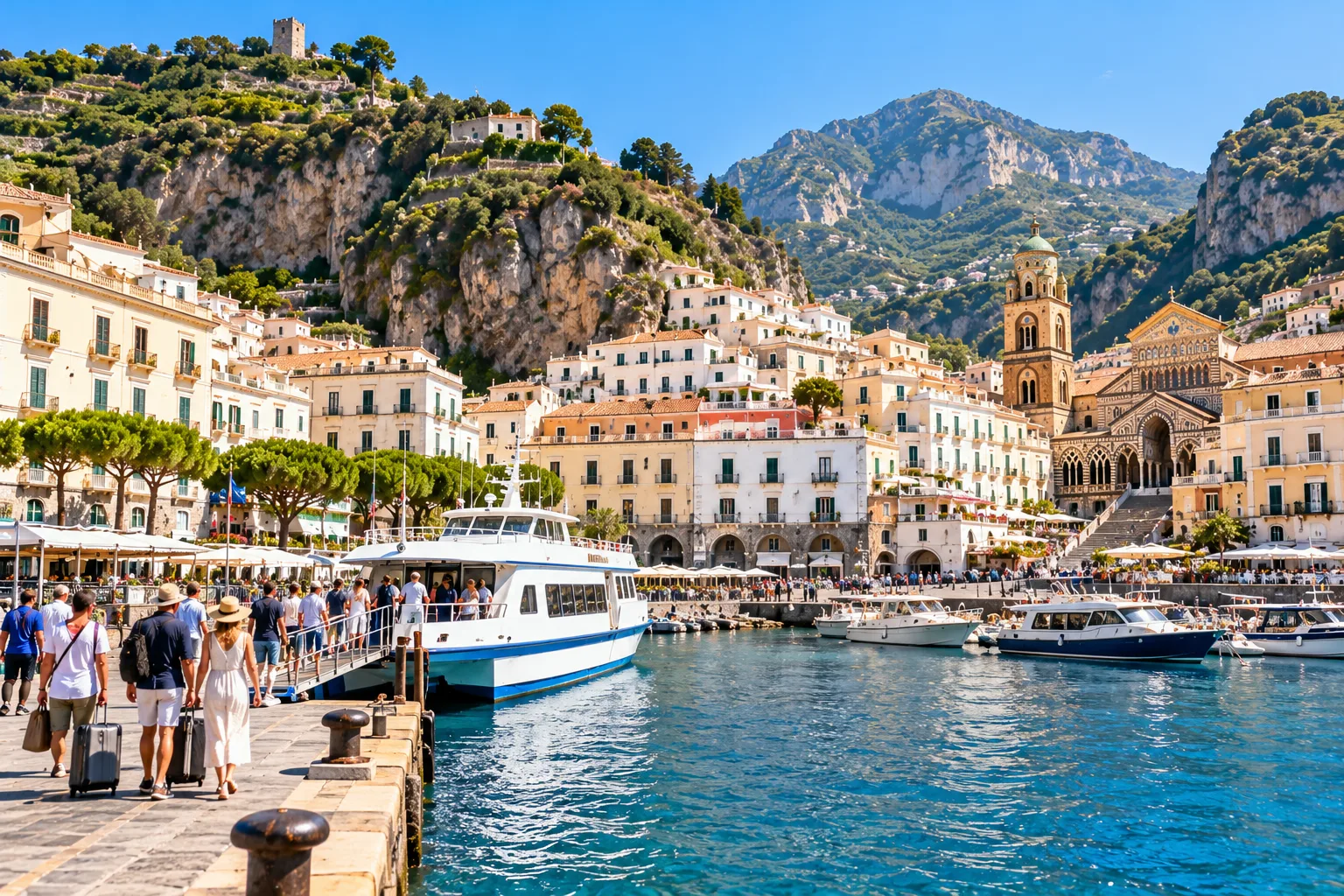
Amalfi's Maritime Republic Story
The tangible monument that proves Amalfi was not just a scenic village, but an international naval republic whose legal code governed Mediterranean shipping.
"Is Amalfi Cathedral worth visiting? Yes. Is it worth spending your whole day there? No. For luxury travelers, allocating 45 to 60 minutes inside unlocks the soul of Amalfi before you head out to lunch or your private yacht along the cliffs."
Inside the Monumental Complex
What to prioritize during your visit: a curated walkthrough of the cathedral's essential cultural spaces.
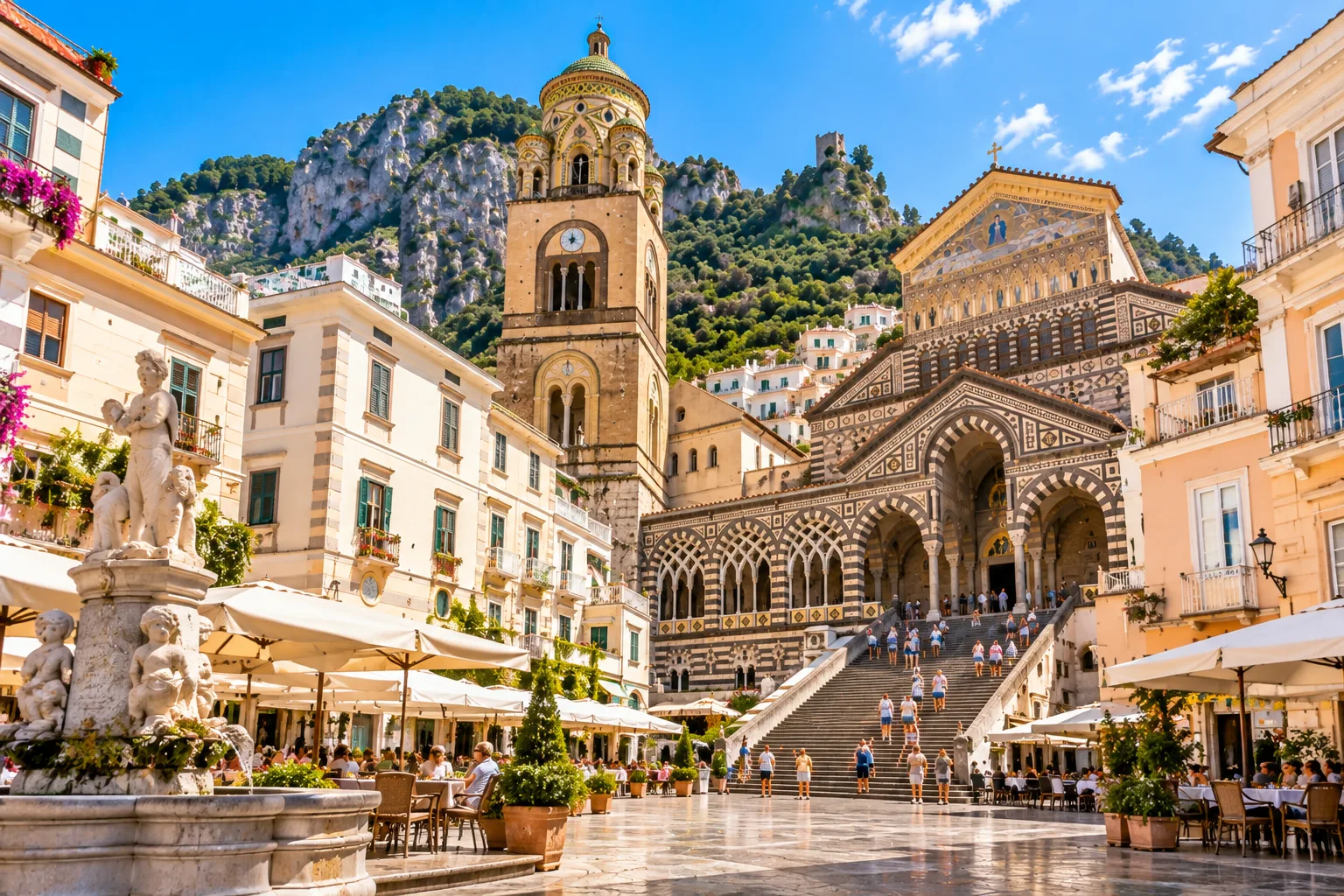
Piazza Duomo & The Grand 62-Step Staircase
Rising commandingly above the vibrant piazza, the monumental 62-step staircase provides an unforgettable ascent toward the polychrome 19th-century façade and medieval bronze portal.
- Dramatic vantage point over lively Piazza Duomo cafés
- Striped marble exterior blending Moorish and Gothic design
- Bronze doors cast in Constantinople around 1066
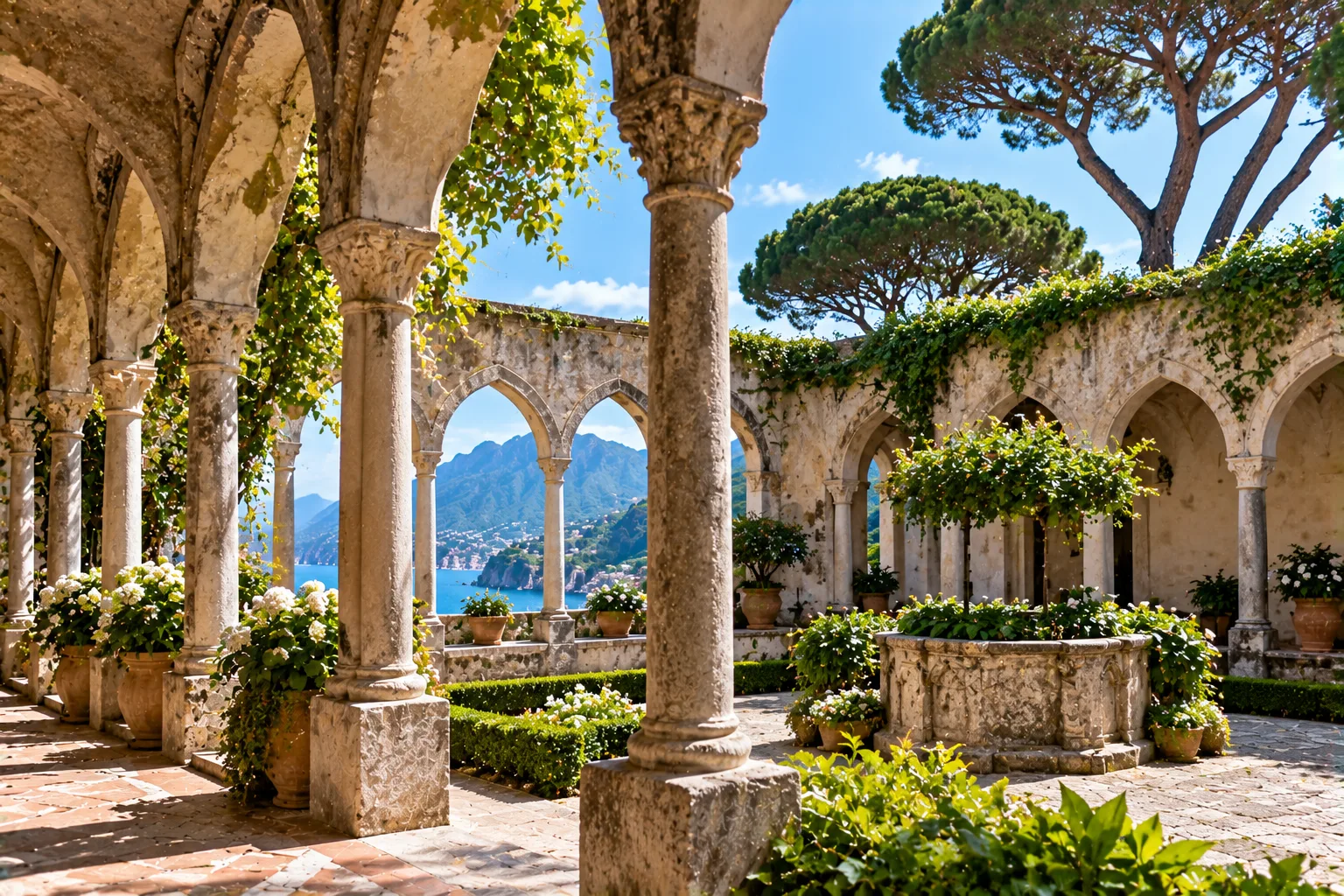
The Cloister of Paradise (Chiostro del Paradiso)
Step from the bustling energy of town directly into 13th-century tranquility. Slender twin columns support interlocking pointed arches surrounding a lush courtyard of Mediterranean greenery.
- Built between 1266 and 1268 for Amalfi's noble families
- Arab-Norman pointed arches creating geometric shadow play
- Ancient Roman and medieval marble sarcophagi on display
The Crypt of St. Andrew the Apostle
Beneath the high altar lies the opulent crypt where the relics of St. Andrew have rested since 1208. The subterranean vault gleams with marble inlays, Renaissance frescoes, and a colossal bronze statue of the saint.
- Houses the revered relics brought after the Fourth Crusade
- Intricate marble marquetry and rich 17th-century frescoes
- Central to Amalfi's biannual patron saint celebrations
The Diocesan Museum & Basilica of the Crucifix
Amalfi's earliest cathedral structure dating to 596 AD now serves as the Diocesan Museum, preserving invaluable episcopal vestments, reliquaries, medieval mosaics, and silver chalices.
- Originally the primary cathedral before the adjacent church was built
- 13th- and 14th-century southern Italian fresco cycles
- Precious gold and silver reliquary heads of early saints
The Cathedral Interior & Gilded Coffered Nave
The main church reveals three expansive naves remodeled in high Baroque style during the early 1700s, featuring coffered ceilings adorned with gold leaf and oil canvases depicting St. Andrew's martyrdom.
- Magnificent gilded ceilings with 18th-century canvas paintings
- Majestic central altar flanked by ancient granite columns
- A dramatic atmospheric shift from bright Mediterranean sunlight
Going Inside vs. Photographing the Exterior
Go Inside the Complex If You:
- Want cultural depth and history to balance the coastal scenery
- Appreciate Arab-Norman architecture, crypts, and medieval cloisters
- Have 45 to 60 minutes between transfers or dining reservations
- Are traveling as a couple or family wanting a peaceful retreat from crowds
- Are interested in how Amalfi became a historic maritime republic
Exterior Photo Only If You:
- Have under 20 minutes before your ferry or private driver departs
- Are focused solely on beach clubs, swimming, and private boat charters
- Have already explored multiple grand cathedrals in Rome or Florence
- Have severe mobility restrictions that make navigating stairs difficult
Our luxury recommendation: Allocate 45 to 60 minutes for a complete, unrushed visit. Step inside the cloister, explore the crypt, and let the historical context transform how you see the entire Amalfi Coast.
Recommendations by Traveler Style
First-Time Visitors
Strongly Recommended
Essential cultural anchor for your Amalfi Coast journey. Exploring the interior and cloister immediately sets Amalfi apart from ordinary resort towns.
Luxury Travelers
Curated 45–60 Minute Visit
Pair a morning private guided walkthrough with a waterfront seafood lunch and an afternoon private coastal yacht charter for flawless itinerary rhythm.
History Enthusiasts
Must-See Historic Monument
Unrivaled medieval significance. The 1208 Byzantine relics, Arab-Norman cloisters, and 9th-century basilica provide profound historical immersion.
Cruise Passengers
Focused 30–45 Minute Stop
Ideal cultural stop right near the ferry piers and tender docks. Schedule it early upon arrival to avoid midday tour group congestion.
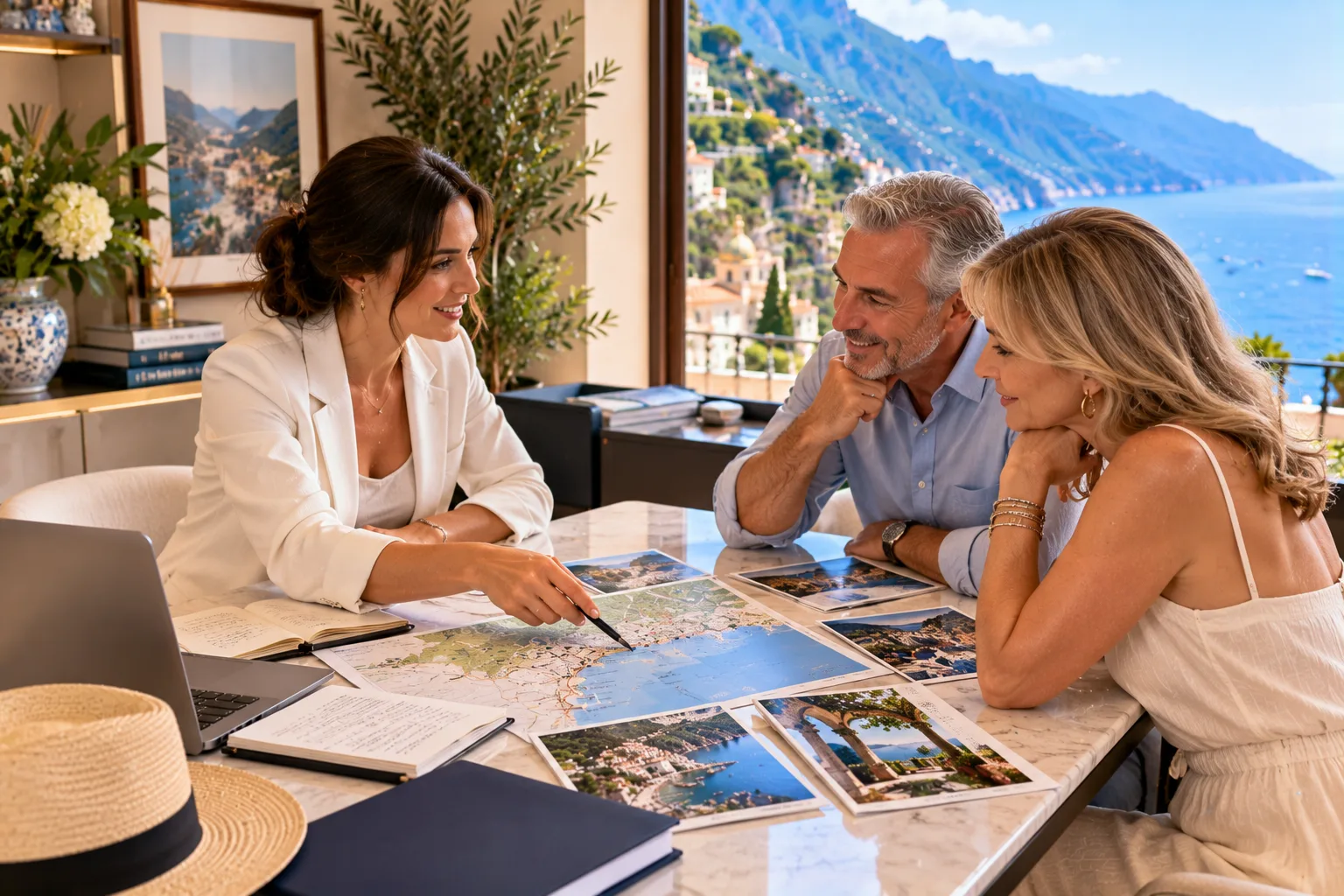
Curate Your Perfect Amalfi Coast Journey
Connect with luxury travel advisor Angela Hughes to design a bespoke Italian itinerary combining seamless private drivers, five-star villas, and authentic cultural depth.
Consult a Travel AdvisorAmalfi Cathedral Through the Lens of Trips & Ships
Discover the intricate details, ancient craftsmanship, and sacred spaces that define the Duomo di Sant'Andrea.
The Monumental Façade
Reconstructed in the late 19th century with striking polychrome striped marble, Moorish arches, and glittering upper-tier mosaics.
Chiostro del Paradiso
Intertwined Arab-Norman arches and slender columns encircling an oasis of tranquil Mediterranean greenery.
The Bronze Entrance Doors
Cast in Constantinople before 1066 and brought across the sea by Amalfi patrician Pantaleone de Comite Maurone.
The Crypt of St. Andrew
The revered subterranean sanctuary finished in rich marble inlay and frescoes, safeguarding the apostle's sacred relics.
The Romanesque Bell Tower
Constructed between 1180 and 1276, crowned with intricate majolica-tiled interlaced arches that frame Amalfi's skyline.
The Gilded Coffered Ceiling
Ornate gilded ceiling framing 18th-century canvases that portray the miracles and martyrdom of Saint Andrew.
Angela Hughes Authority & Credentials
CEO, Trips & Ships Luxury Travel • Founder, Luxury Travel University

Angela Hughes
With over 40 years of luxury travel industry experience and having explored 121+ countries, Angela Hughes evaluates destinations by what enriches a traveler's journey rather than simple checklists. Recognized by TravelPulse in 2026 as one of the Most Influential Women in Travel.
KEY QUALIFICATIONS & ACHIEVEMENTS
- 40+ Years of Travel Industry Leadership
- 121+ Countries Explored Across 7 Continents
- 2024 Luxury Travel Influencer of the Year (Travel Leaders Network)
- 2026 Most Influential Women in Travel (TravelPulse)
- Weekly Industry Columnist & Advisory Board Member
Frequently Asked Questions
Yes — Amalfi Cathedral (Duomo di Sant'Andrea) is strongly worth visiting, especially if you venture beyond Piazza Duomo into the monumental complex containing the Cloister of Paradise, the Diocesan Museum, and the sacred Crypt of St. Andrew.
For most travelers, 30 to 60 minutes is ideal. 15 minutes allows you to view the exterior and staircase from Piazza Duomo, while 45 to 60 minutes provides ample time to comfortably explore the cathedral interior, crypt, and cloister.
Admiring the exterior and climbing the lower staircase from Piazza Duomo is free. Entering the monumental complex (which includes the Cloister of Paradise, Basilica of the Crucifix museum, and the crypt) requires an admission ticket (typically €3–€5), which is widely considered well worth the small fee.
Early morning (right at opening around 9:00 AM) or late afternoon (after 4:30 PM) is best. During these hours, Piazza Duomo is significantly quieter, temperatures are pleasant, and you avoid peak cruise excursion and day-tripper crowds.
The main entrance involves a steep 62-step staircase from the piazza. Travelers with limited mobility should take the steps slowly or check with local tour operators regarding alternative accessibility routes into the cloister and museum areas.
Because it is an active sacred Catholic site, modest dress is required. Shoulders and knees should be covered. For luxury travelers in warm weather, a lightweight linen shirt, elegant trousers, or a below-the-knee summer dress is stylish and appropriate.
Absolutely. You do not need to be religious to appreciate its extraordinary Arab-Norman architecture, 13th-century Moorish cloister, Byzantine bronze doors, or its central role in Mediterranean maritime history.
They offer complementary experiences rather than substitutes. Positano is famed for cliffside shopping and scenery, Ravello for tranquil gardens and clifftop villas, while Amalfi Cathedral offers the deepest historical and cultural context on the entire coast.
The monumental complex consists of four distinct historical areas: the 13th-century Moorish Cloister of Paradise (Chiostro del Paradiso), the 9th-century Basilica of the Crucifix (which now houses the Diocesan Museum and treasury), the richly decorated Baroque Crypt containing the sacred relics of the Apostle Saint Andrew, and the grand 13th-century Cathedral (Duomo) itself with its ornate gilded ceiling and bronze statues.
Non-flash personal photography is permitted inside the Cloister of Paradise, the museum galleries, and the crypt. Tripods, commercial equipment, and flash photography are strictly prohibited to protect the delicate medieval frescoes and preserve the sacred ambiance. Photography may be restricted during active religious services.
While independent audio guides can sometimes be rented at the ticket desk, booking a licensed private local guide is the premier way to experience the cathedral. A knowledgeable guide reveals hidden Byzantine symbolism, explains the complex Moorish-Norman architecture, and unlocks the fascinating thousand-year maritime history connecting Amalfi to Constantinople and Jerusalem.
Opening hours vary seasonally: from March to June and throughout October, the complex is generally open daily from 9:00 AM to 6:45 PM; during peak summer (July to September), hours extend from 9:00 AM to 7:45 PM; in winter (November to February), hours are typically 10:00 AM to 1:00 PM and 2:30 PM to 4:30 PM. Touring access pauses or adjusts during Sunday Mass and Catholic celebrations.
Yes, Catholic Mass is celebrated regularly in the Cathedral. Sunday and feast day services typically occur at 10:30 AM and 6:30 PM (times can shift seasonally). Attending Mass is free and open to respectful visitors, though sightseeing, walking around, and taking photos inside the nave are strictly prohibited during liturgical celebrations.
The massive central bronze doors were cast in Constantinople (modern-day Istanbul) around 1060 AD by Byzantine master foundry craftsmen, commissioned by the wealthy Amalfitan merchant Pantaleone de Comite Maurone. They were the very first monumental bronze doors installed in post-classical Italy, preceding those of Venice and Rome and standing as enduring proof of Amalfi's maritime empire.
Visiting the Duomo complex takes about 45 to 60 minutes and is best scheduled early in the morning right at 9:00 AM. Starting here allows you to experience Piazza Duomo before the mid-day crowds arrive, enjoy an espresso on the piazza steps, and then continue onward to the Paper Museum, a coastal boat excursion, or an afternoon transfer to Ravello.
Don't Just Visit Amalfi. Experience It.
From private guided tours of the Duomo to cliffside dining and chartered yacht cruises, let Trips & Ships Luxury Travel create an Italian journey tailored around you.
Start Planning Your Amalfi Trip