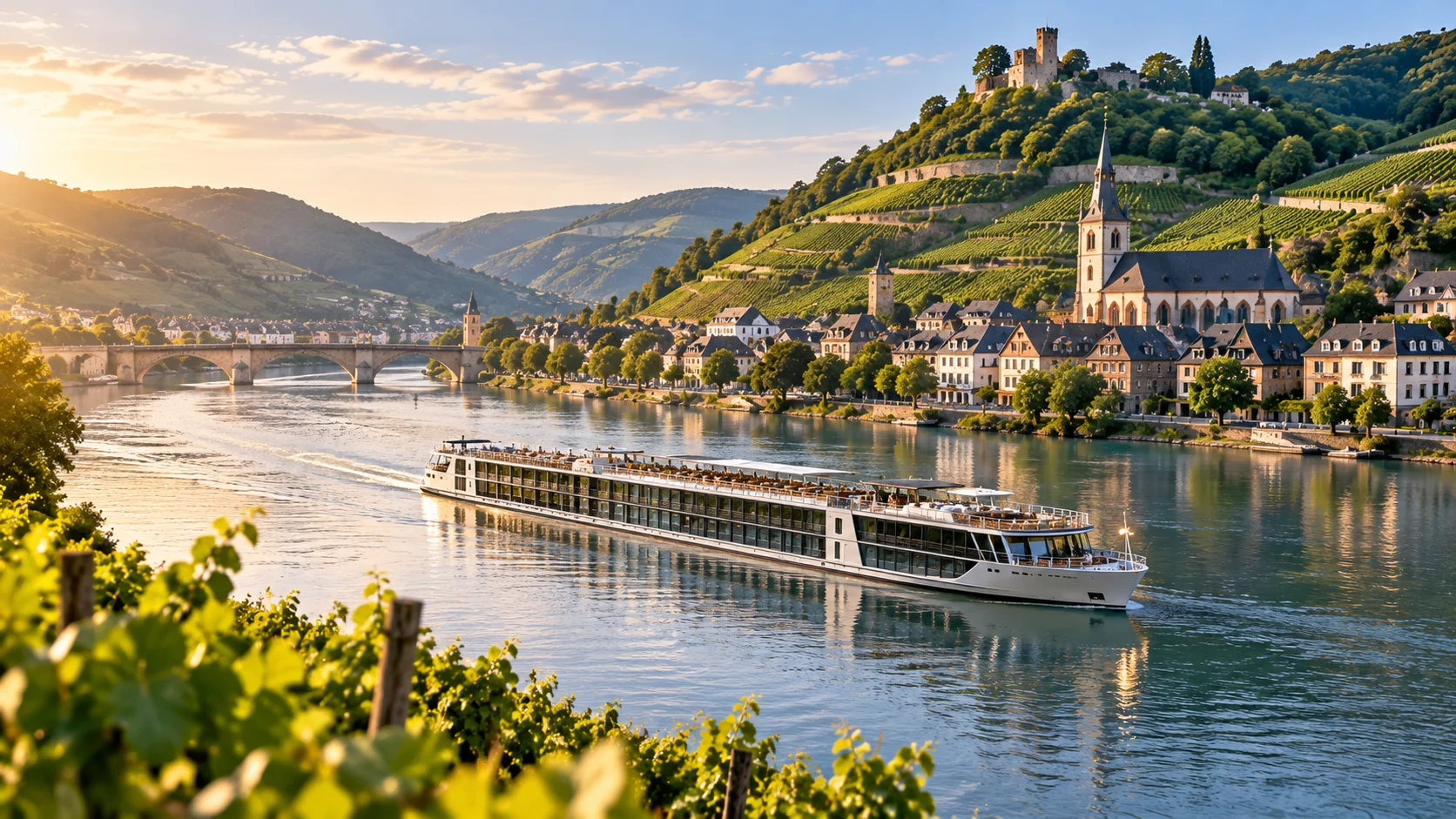
If you prefer intimate ships, destination-focused days, and fewer crowds, both a river cruise and a small-ship cruise can be compelling choices. The biggest difference is not simply ship size. It is where the ship can take you and how that geography shapes the experience.
River cruises travel inland waterways, connecting cities, towns, and cultural landscapes along rivers such as the Rhine, Danube, Rhône, Seine, and Douro. Small-ship cruises, as we are using the term in this comparison, travel primarily on seas and coastal waters, opening up islands, coastlines, smaller maritime ports, and secluded harbors.
Neither is universally better. A river cruise may suit you if your priorities are inland culture, frequent port calls, and continuous riverside scenery. A small-ship cruise may be a better fit if you are drawn to coastlines, islands, boutique ports, and a more maritime style of travel.
The right choice comes down to the kind of journey you want to have.
River Cruise vs. Small Ship Cruise at a Glance
| Factor | River Cruise | Small-Ship Cruise |
|---|---|---|
| Where you travel | Inland rivers and waterways | Seas, coastlines, islands, and maritime regions |
| Destination focus | Cities, villages, culture, and inland scenery | Coastal destinations, islands, smaller ports, and harbors |
| Ship scale | Small | Small to boutique-sized |
| Motion | Generally calmer inland waters | Varies according to route and sea conditions |
| Port experience | Often convenient to towns and cities | May dock or tender depending on vessel and port |
| Sea days | Uncommon | Possible depending on itinerary |
| Onboard amenities | Typically more limited by vessel dimensions | Can offer broader facilities, but varies significantly by ship |
| Expedition component | Usually not expedition-focused | Some small ships are expedition vessels, but many are not |
The most useful way to compare the two is not to ask which cruise style is “better.” Instead, ask which one gives you access to the places and experiences you most want from your trip.
First, What Do We Mean by a “Small-Ship Cruise”?
This distinction matters because a river cruise is, technically, also a form of small-ship travel.
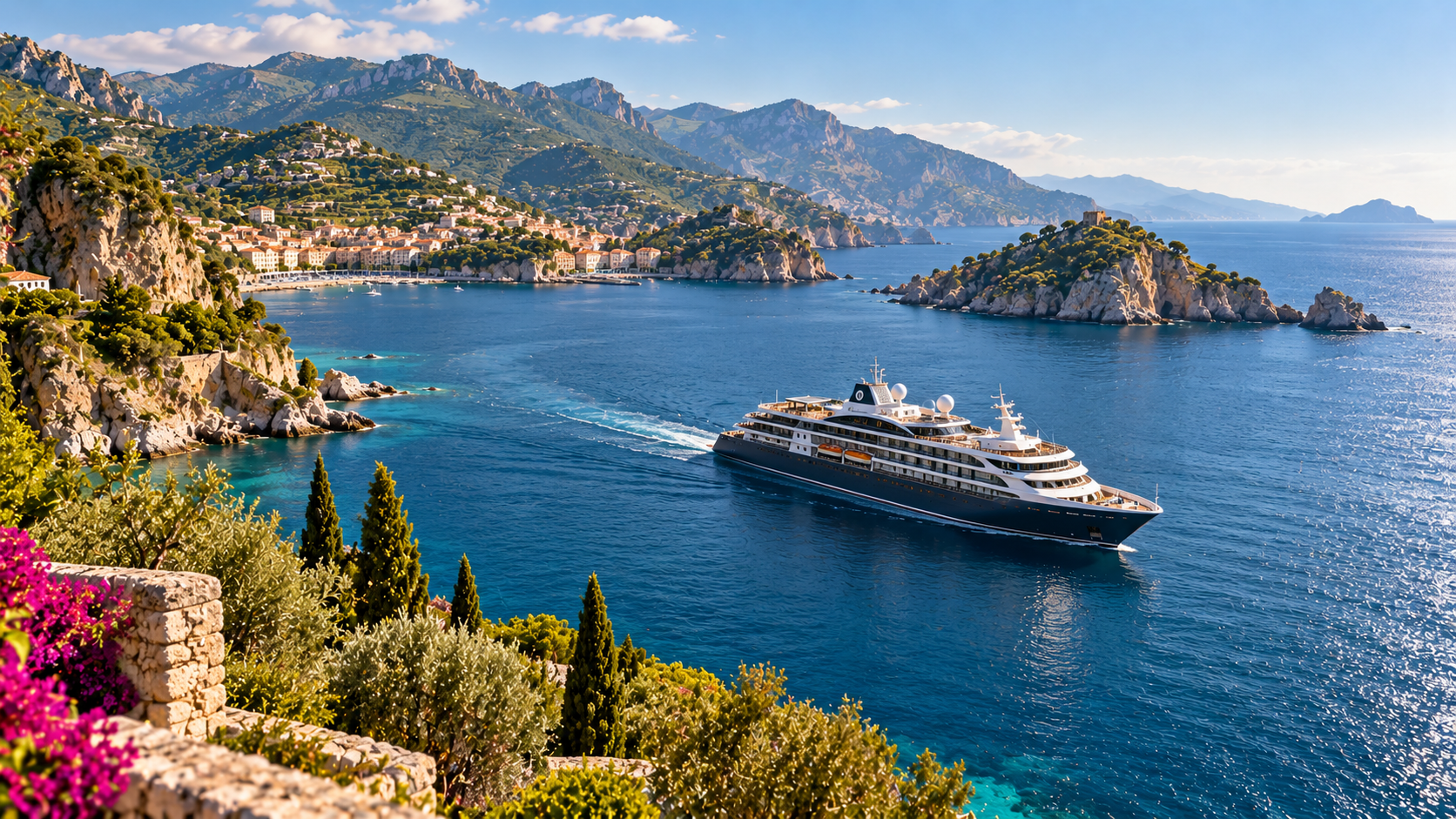
For this comparison, small-ship cruise means a smaller ocean-going, coastal, or yacht-style cruise rather than a mainstream large ocean ship.
There is no single universal passenger-count cutoff that defines every small-ship cruise. Ship sizes and configurations vary among cruise lines and destinations.
That is why comparing river cruising with small-ship ocean cruising requires more nuance than a typical river-versus-ocean comparison.
A river vessel is designed specifically for inland waterways. Its dimensions may be influenced by bridges, locks, and the rivers it needs to navigate. Viking, for example, lists one of its Longships at 443 feet with capacity for 190 guests.
A small ocean-going ship operates in a different environment. It may be designed to reach coastal towns, islands, secluded harbors, or other destinations that larger ships cannot easily access. Windstar, for example, currently operates yachts carrying fewer than 350 guests.
Both experiences can feel intimate. But they use their smaller scale in different ways.
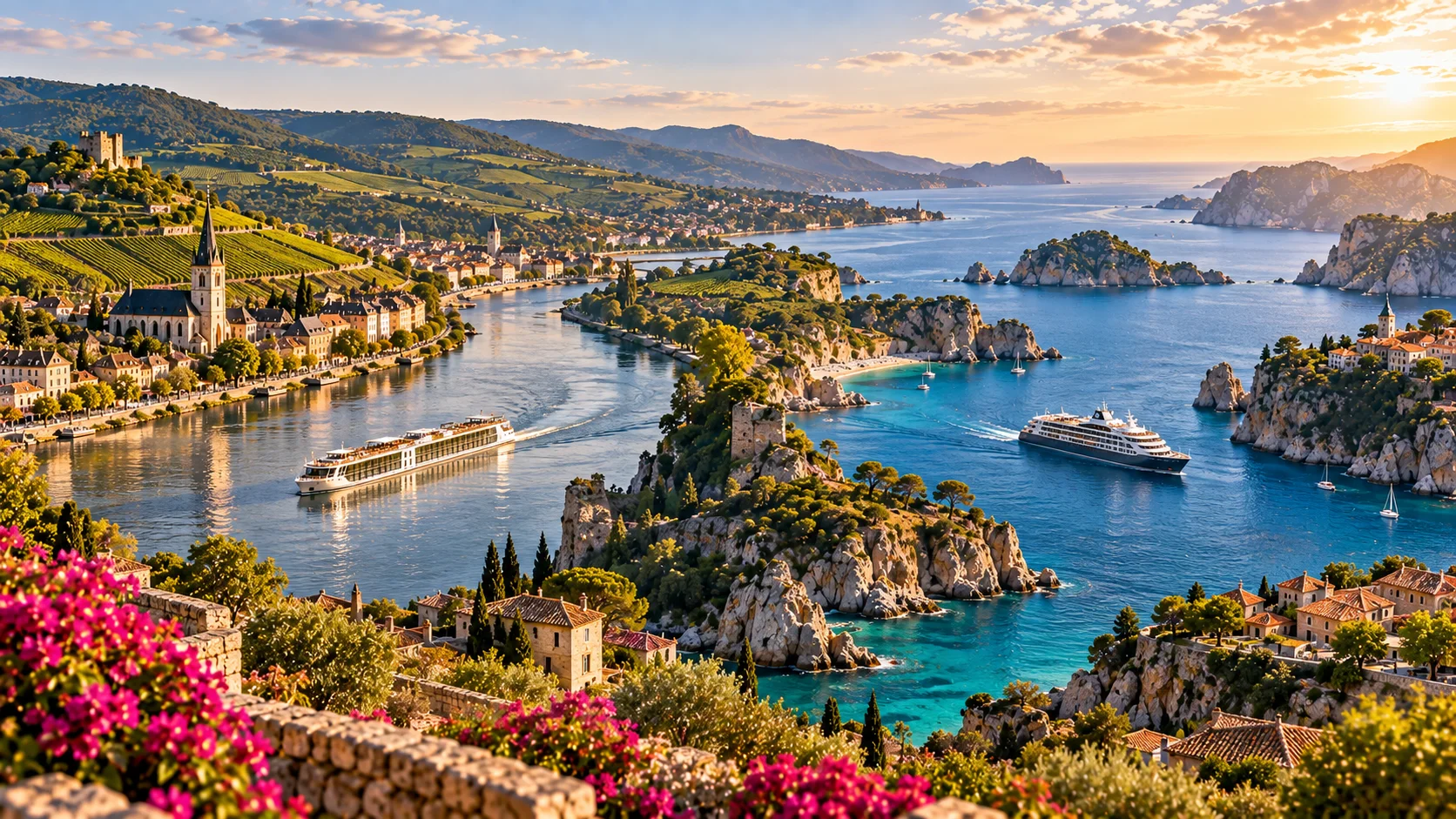
The Biggest Difference Is Where You Want to Go
Before comparing restaurants, lounges, cabins, or inclusions, start with geography.
Choose a river cruise for inland waterways and cultural corridors
River cruising lets the waterway itself become part of the itinerary.
In Europe, rivers such as the Rhine, Danube, Rhône, Seine, and Douro connect historic cities, smaller communities, wine regions, and cultural landscapes.
Instead of crossing open water between distant ports, the ship moves through an inhabited landscape. You may spend part of the day watching villages, vineyards, castles, or countryside pass by outside.
River cruising can also make multi-destination travel relatively seamless. You unpack once while the ship moves between stops along the river.
For travelers whose wish list revolves around historic European cities, regional culture, food and wine, and inland scenery, that can be a significant advantage.
Choose a small ship for coastlines, islands, and maritime destinations
Small ocean-going ships extend the intimate cruising concept beyond rivers.
Their itineraries can connect islands, coastal towns, secluded bays, and smaller maritime ports. Depending on the vessel and itinerary, this can make small-ship cruising particularly appealing in regions where the coastline is central to the experience.
Think less about following a single waterway and more about moving among islands, peninsulas, coastal cities, and harbors.
Windstar, for example, emphasizes its ability to visit smaller ports, secluded coves, villages, cities, and remote islands.
If your travel wish list starts with the Mediterranean, Greek islands, coastal destinations, or other maritime regions, a small ocean-going ship may open possibilities a river vessel cannot.
How Does the Daily Rhythm Feel Different?
Both cruise styles eliminate much of the packing and unpacking required by a land itinerary, but the rhythm can feel different.
On a river cruise
River itineraries are often closely connected to the destinations along the waterway.
There may be frequent port calls, cultural touring, scenic sailing, and relatively short distances between stops. Because the ship is traveling inland, the scenery along the river can remain part of the experience even while you are sailing.
The ship functions not only as your accommodation but also as a moving vantage point on the region.
On a small-ship cruise
The rhythm depends more heavily on the itinerary.
One voyage may move between Mediterranean islands and coastal cities. Another may include longer sailing periods or time on open water.
Because small ocean ships are not restricted to a river corridor, their itineraries can cover a wider variety of maritime geography.
For some travelers, that freedom is the attraction.
Ship Size: Both Can Be Intimate
If your goal is to avoid the feeling of a very large cruise ship, either option may work.
River vessels are necessarily compact because they need to navigate inland waterways and, on many routes, pass beneath bridges or through locks.
Small ocean-going ships are also intentionally smaller than mainstream mega-ships, although their capacities and physical dimensions vary considerably.
That means passenger count alone should not determine your choice.
Instead, consider what the ship’s size allows it to do.
On a river cruise, smaller dimensions enable inland navigation.
On a small ocean ship, smaller scale can provide access to ports, islands, coves, and coastal areas that may be impractical for much larger vessels.
The more useful question is:
Where does this particular ship allow me to go?
Which Has the Better Port Experience?
Neither cruise style automatically has a better port experience. They provide different kinds of access.
River cruises can bring travelers into or near communities directly along the waterway. AmaWaterways, for example, highlights the ability of river cruising to reach historic city centers and villages while allowing travelers to visit multiple destinations without changing hotels.
But avoid assuming that every river ship always docks directly in the center of every destination. Dock locations vary, and river vessels may sometimes berth alongside one another.
Small ocean ships offer a different advantage: access to maritime destinations that may not work for much larger vessels.
Depending on the port and ship, you may walk ashore directly or reach land by tender.
If easy access to inland European cities and towns is a priority, river cruising deserves serious consideration.
If islands, smaller coastal communities, and secluded maritime settings are more appealing, small-ship cruising may have the advantage.
Dining, Lounges, and Onboard Amenities
This is one area where it is important not to generalize too broadly.
River vessels have physical constraints imposed by the waterways they navigate. That can mean fewer restaurants, entertainment venues, and large-scale facilities than you might find aboard an ocean-going ship.
But that does not mean the onboard experience is basic. Luxury river lines can offer refined dining, lounges, comfortable accommodations, and thoughtfully designed public spaces.
Small ocean ships vary considerably.
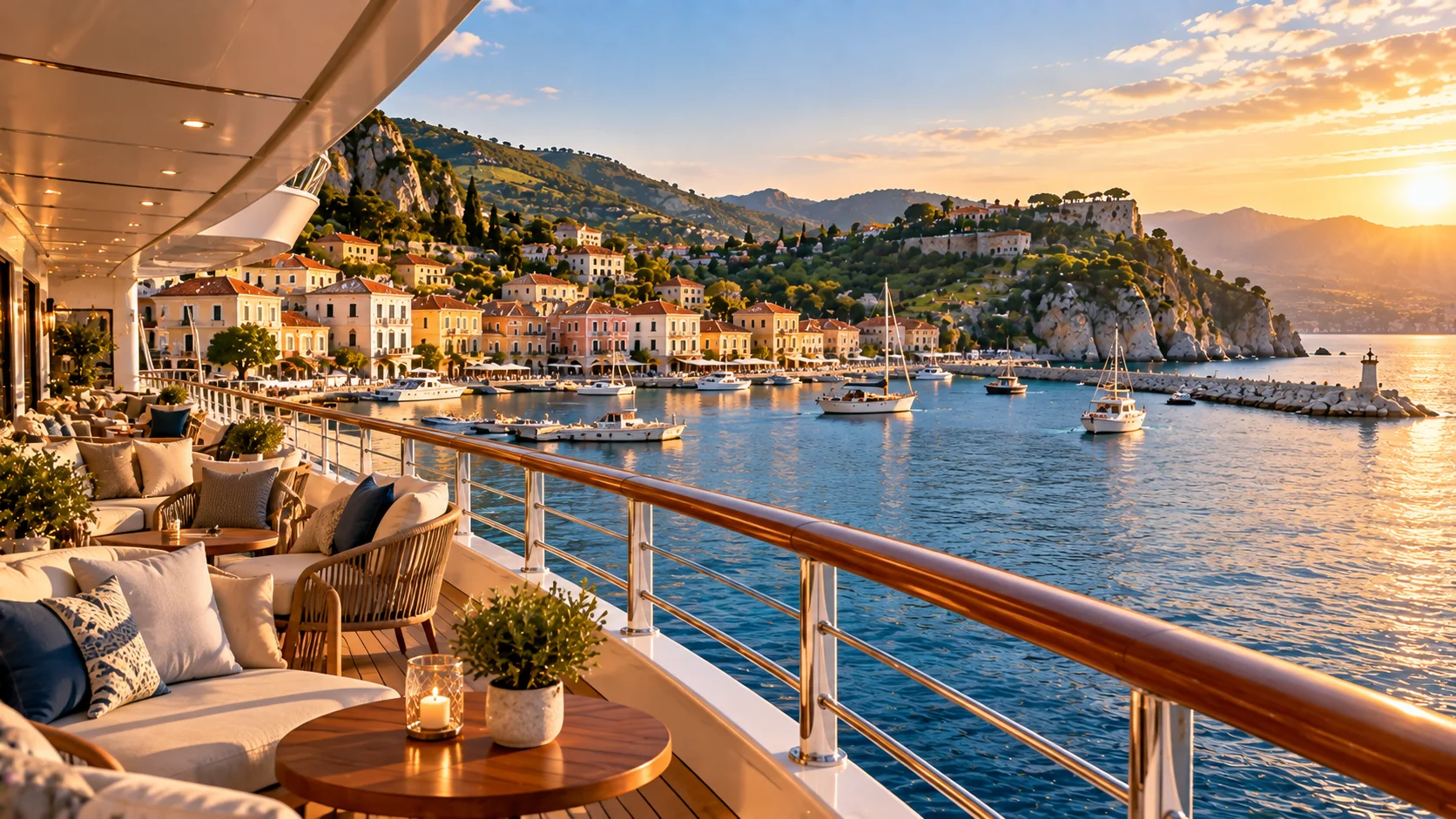
Some are yacht-like and intentionally minimalist. Others offer multiple dining venues, wellness facilities, pools, lounges, and more extensive public spaces.
If onboard variety matters greatly to you, compare the specific vessels you are considering rather than assuming that every small ship or every river ship provides the same experience.
Shore Excursions and Destination Immersion
Both styles can be highly destination-focused, but they approach immersion differently.
River cruising is naturally connected to the cultural geography of the river. Historic cities, smaller towns, wine regions, and countryside can form a continuous itinerary.
Small-ship cruising can create a similarly destination-intensive experience along coastlines and among islands.
The important distinction is not that one style offers “real immersion” and the other does not. It is what type of destination immersion you want.
If you imagine exploring European towns, historic cities, vineyards, and inland cultural regions, a river cruise may align more closely with that picture.
If you imagine exploring islands, harbors, seaside towns, and coastal landscapes, small-ship cruising may be the stronger match.
Excursion programs and what is included in the fare vary by cruise line, itinerary, and fare type, so compare the actual options before booking.
What About Seasickness and Motion?
For travelers concerned about motion, river cruising can have an advantage.
Because river ships operate on inland waterways rather than open seas, they generally experience calmer water conditions than ocean-going vessels.
Small ships operate in maritime environments, so movement can vary with the ship, route, weather, and sea conditions.
That does not mean everyone will experience motion discomfort on a small ship, nor does it mean every river sailing is completely motion-free.
But if sensitivity to ocean motion is an important concern, it should be part of your decision.
What Is Typically Included?
There is no reliable one-size-fits-all answer.
Some river cruise lines bundle shore excursions, dining, beverages, Wi-Fi, or gratuities into particular fares. Others structure their inclusions differently.
The same is true for small-ship cruise lines.
Do not assume that one category is automatically more inclusive than the other.
When comparing actual sailings, look at the complete trip cost and verify what the fare includes:
- accommodations;
- dining;
- beverages;
- shore excursions;
- gratuities;
- Wi-Fi;
- transfers;
- specialty dining;
- and any pre- or post-cruise components you are considering.
A fare that appears higher initially may include more of the experiences you were already planning to purchase, while another may leave more choices à la carte.
The relevant comparison is the specific fare and experience, not simply “river versus small ship.”

River Cruise vs. Small Ship Cruise by Travel Style
You may prefer a river cruise if…
You are most excited by historic cities, inland scenery, cultural touring, wine regions, and the experience of traveling through a destination rather than across open water.
River cruising can also appeal if you prefer a highly destination-focused itinerary without needing an extensive list of onboard attractions.
You may prefer a small-ship cruise if…
Your wish list centers on coastlines, islands, smaller harbors, and maritime destinations.
It may also suit you if you want the intimacy of a smaller vessel but would appreciate a wider range of ship layouts and onboard facilities than river-vessel dimensions may allow.
You may prefer a river cruise if ocean motion concerns you
Inland waterways generally offer calmer conditions than open seas.
That does not make any cruise completely motion-free, but it can make river cruising attractive to travelers hesitant about ocean sailing.
You may prefer a small ship if the coastline is the destination
For places defined by islands, harbors, coves, and coastal geography, the vessel’s ability to travel by sea becomes part of the advantage.
You may prefer either if your priority is avoiding mega-ships
This is where the choice becomes more interesting.
Both can offer a smaller-scale alternative to mainstream large-ship cruising.
Once you have decided that intimacy matters, destination becomes the more useful deciding factor.
Is a Small-Ship Cruise the Same as an Expedition Cruise?
No.
Some expedition ships are small ships, but not every small ship is an expedition ship.
Expedition cruisingis typically built around exploration of more remote environments, with the destination, specialized activities, and expert-led experiences playing a central role.
A small luxury ship sailing among Mediterranean islands may provide an intimate maritime experience without being an expedition cruise at all.
This distinction matters because travelers sometimes use “small ship” and “expedition” interchangeably even though they describe different aspects of a voyage.
Small ship describes the scale and style of the vessel. Expedition describes the nature of the journey.
Which Is Better for Your First Small-Ship Experience?
If you are moving away from large ocean cruising for the first time, either can be a good introduction to smaller-scale travel.
A river cruise may feel approachable if your priorities are European culture, frequent stops, inland scenery, and calmer waterways.
A small ocean ship may feel more familiar if you still enjoy the rhythm of maritime cruising but want a more intimate vessel and access to smaller destinations.
Rather than asking which is easier for a first-timer, ask:
Which itinerary makes me want to go?
The destination should lead the decision.
Can You Enjoy Both?
Absolutely.
These are not competing travel styles that require you to choose one forever.
A traveler might choose a Danube river cruise for historic cities and cultural landscapes, then choose a small-ship Mediterranean voyage for islands and coastal towns on another trip.
In fact, travelers who appreciate one may find a lot to like about the other because both can emphasize smaller-scale travel, destination access, and an alternative to mega-ship cruising.
They simply deliver those advantages in different geographic settings.
How to Narrow Your Choice
If both still sound appealing, answer these five questions.
1. Where do you actually want to travel?
Start with the destination, not the ship.
- Inland river corridor? Look closely atriver cruising.
- Islands and coastlines? Look closely atsmall-ship cruising.
2. How important is the ship itself?
If you mainly view the vessel as an elegant base for exploring ashore, either style can work.
If specific onboard facilities are important, compare individual vessels carefully.
3. How do you feel about open water?
If ocean motion is a significant concern, river cruising deserves additional consideration.
4. What do you want to do ashore?
Think beyond the number of ports.
Would you rather explore inland cities, villages, wine regions, and cultural corridors—or islands, harbors, coastal towns, and maritime landscapes?
5. What does the fare actually include?
Once you have narrowed the choice to specific sailings, compare inclusions rather than category stereotypes.
That is where the decision becomes much more concrete.
So, Which Is Right for Your Travel Style?
Choose based on where you want to travel and how you want the journey to feel.
A river cruise is likely to appeal more if you picture yourself sailing through inland landscapes, stepping ashore in historic cities and towns, and making culture and scenery the center of each day.
A small-ship cruise may be the stronger fit if you picture islands, coastlines, smaller maritime ports, and the freedom to explore destinations connected by sea.
If both sound appealing, that is not a problem. It probably means you appreciate what these two styles have in common: intimacy, destination focus, and a more personal alternative to very large cruise ships.
The final decision does not need to begin with the cruise line.
Begin with the place you most want to experience.
Let Trips & Ships Help You Choose the Right Cruise Style
If you are deciding between a river cruise and a small-ship voyage,Trips & Ships Luxury Travelcan help you compare the destinations, ships, itineraries, and current inclusions that matter to your trip.
The goal is not to choose one cruise style because it is universally “better.” It is to find the experience that fits the way you want to travel.
Frequently Asked Questions
What is the main difference between a river cruise and a small-ship cruise?
The main difference is geography. River cruises travel inland waterways and connect destinations along rivers, while the small-ship cruises discussed here travel primarily on seas and coastal waters, reaching islands, harbors, and maritime destinations.
Is a river cruise considered small-ship cruising?
In a broad sense, yes: river vessels are small ships. For travel-planning purposes, however, river cruising is generally treated as its own category because the waterways, vessel design, destinations, and onboard experience differ significantly from small ocean-going ships.
Which is better for cultural immersion?
Both can be culturally immersive. River cruises can be especially well suited to inland cities, historic towns, wine regions, and cultural corridors. Small ships can provide similarly destination-focused travel in coastal communities and islands. The better choice depends on the culture and geography you want to experience.
Which is better if I am concerned about seasickness?
River cruising generally involves calmer inland waters and avoids the open-ocean conditions that can create more noticeable movement. Small-ship motion varies with the vessel, route, weather, and sea conditions.
Do river cruises include more shore excursions?
Not necessarily. Excursion inclusions vary by cruise line, itinerary, and fare. Compare the specific products you are considering rather than assuming that every river cruise or small-ship cruise follows the same inclusion model.
Are small-ship cruises the same as expedition cruises?
No. Some expedition vessels are small ships, but many small-ship cruises are not expeditions. Expedition cruising is defined more by the exploratory nature of the journey and destination experience than simply by vessel size.
Which cruise style is more luxurious?
Luxury is not determined by whether a ship sails on a river or at sea. Both categories include upscale and luxury products. Service style, accommodations, dining, space, inclusions, and itinerary design vary by individual cruise line and vessel.