Can You Hike Valle delle Ferriere from Amalfi?
Trails, Waterfalls, Nature Reserve Regulations & Luxury Hiking Strategies
Discover how to leave the bustling coastal piazza behind and hike directly into a hidden realm of rushing streams, ancient ironworks ruins, historic paper mills, and rare prehistoric ferns on the CAI 325 trail.
The Essential Trailhead Facts
Everything you need to know before stepping onto the trail from central Amalfi.
Official Route: CAI 325
Begins directly in central Amalfi at Piazza Flavio Gioia, climbing through lemon terraces and stone steps inland.
Protected Nature Reserve
The hiking trail leads through the valley, but entering the core State Nature Reserve requires prior permission.
The Luxury Travel Formula
Combine a guided morning nature hike with the historic Paper Museum, followed by a seaside lunch in Amalfi.
The Hidden Green Oasis Behind Amalfi’s Cliffs
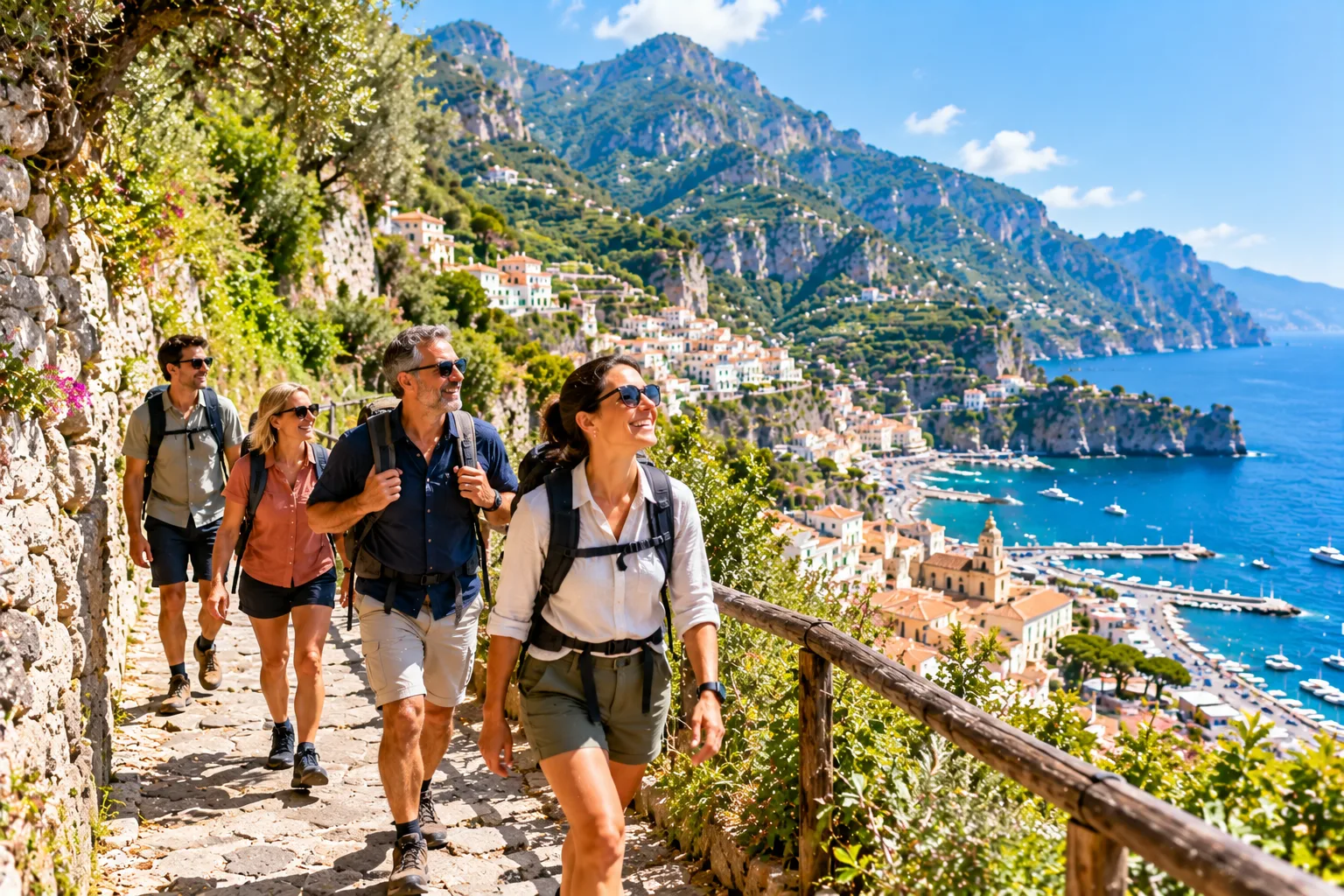
While the world knows the Amalfi Coast for sun-drenched clifftop villages and azure Tyrrhenian waters, Valle delle Ferriere reveals an entirely different dimension of the peninsula. Step off the bustling square of Piazza Flavio Gioia, and within minutes the urban energy yields to quiet stone staircases, fragrant lemon orchards, and the rushing sound of the Canneto torrent.
As you ascend further into the deep river gorge, the Mediterranean climate shifts into a microclimate of cool shade and high humidity. Here stand the dramatic stone arches of ancient ironworks that supplied the Maritime Republic of Amalfi with arms and naval hardware, alongside ruins of medieval paper mills that once produced the world-famed Charta Bambagina. In the heart of the valley, the protected state reserve shelters Woodwardia radicans—a giant fern surviving since the Tertiary period.
For luxury travelers, Valle delle Ferriere is the ultimate antidote to coastal overtourism: a serene, active escape that blends untamed natural waterfalls with centuries of Amalfi maritime ingenuity.
3 Established Approaches to Valle delle Ferriere
Choose the starting point and elevation profile that perfectly matches your pace.
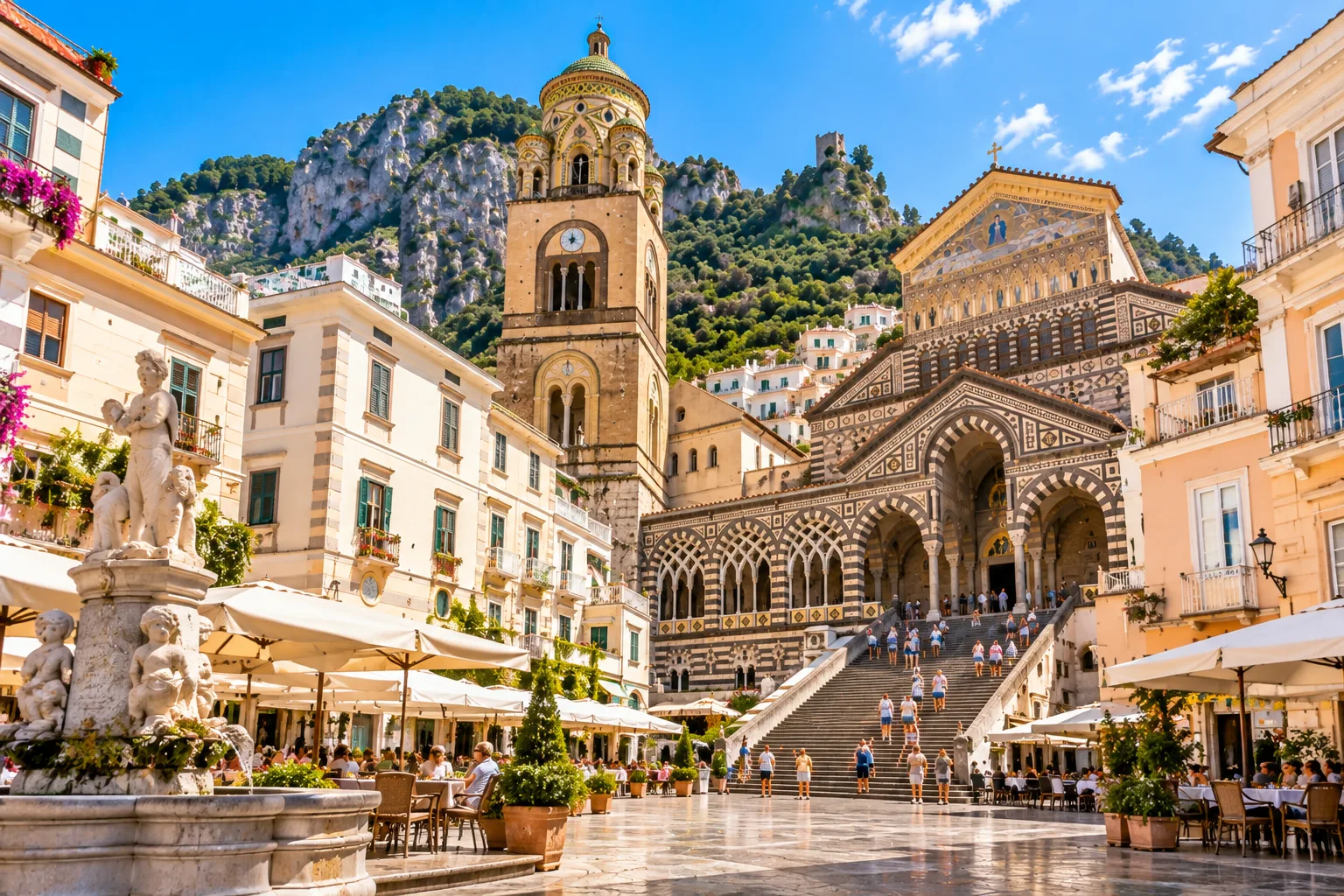
Route 1: Amalfi Center via CAI 325 (Direct Climb)
The classic lower trail starting at Piazza Flavio Gioia. Climbs 301m through the historic mill district directly to the valley floor. Perfect for travelers based in Amalfi without needing car transfers.
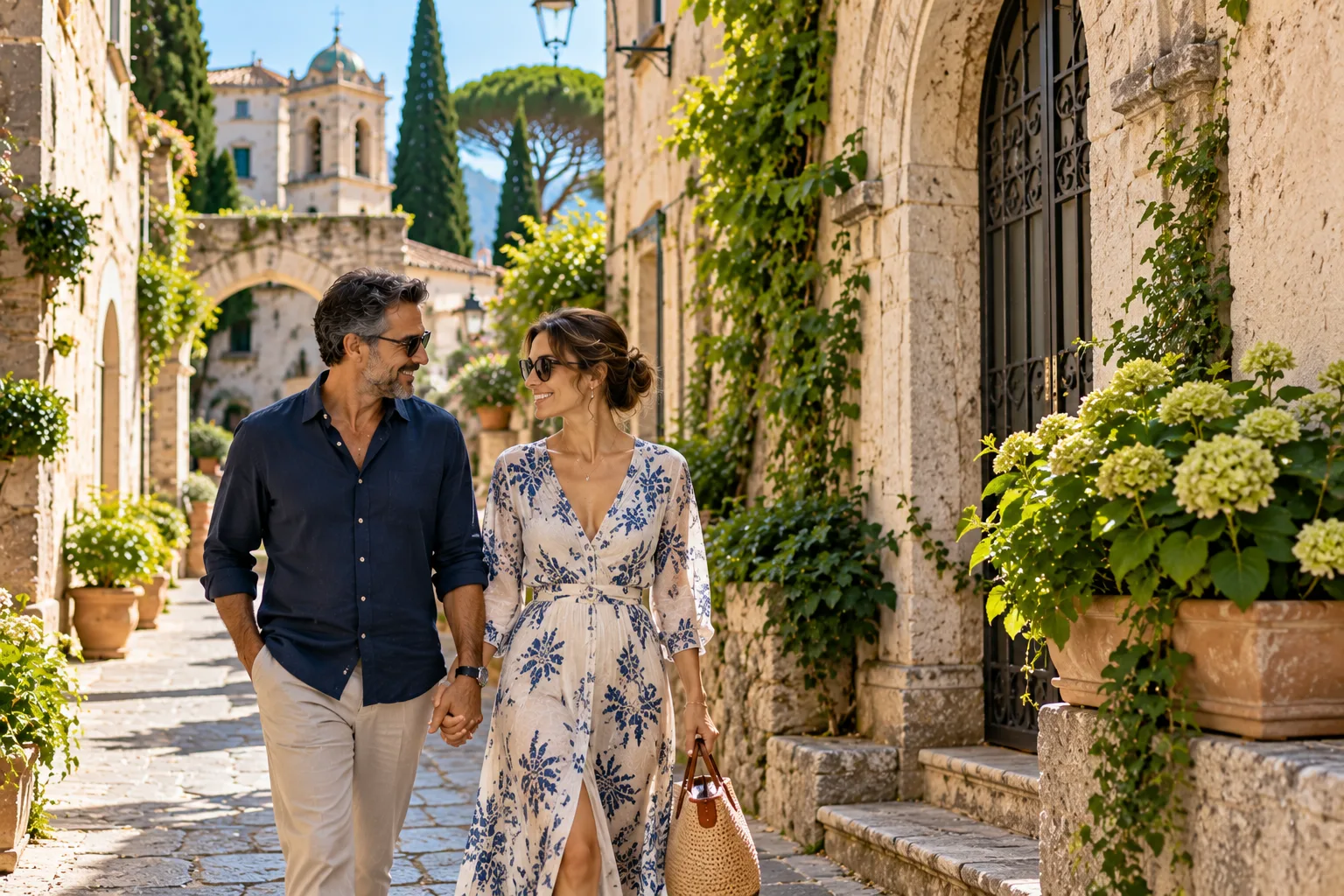
Route 2: Pontone / Scala Descent (Gentle & Scenic)
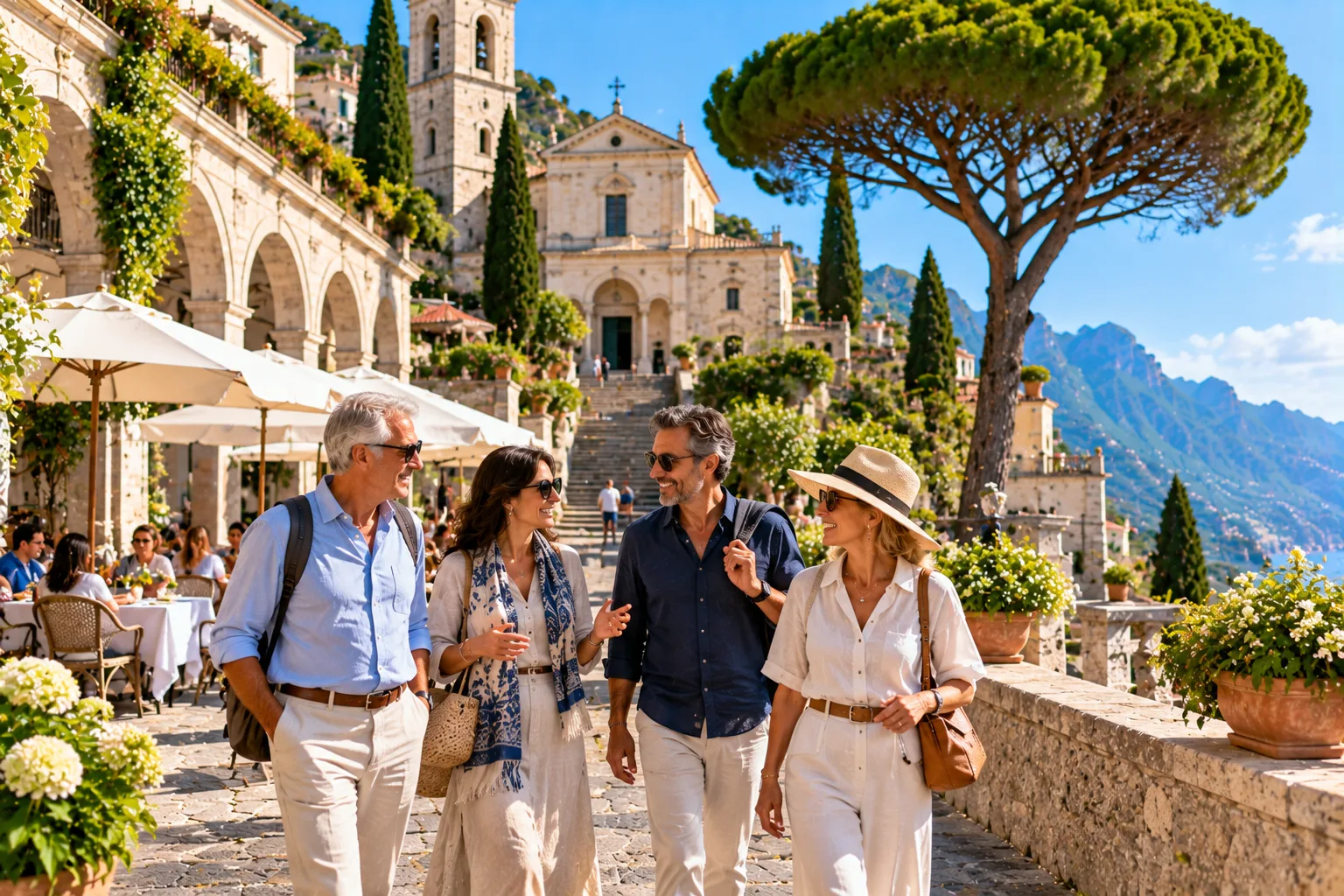
Take a private chauffeur up to the medieval hamlet of Pontone or Scala, then hike down into the valley. Offers panoramic coastline vistas before descending into cool shaded woodland.
Route 3: Pogerola Mountain Circuit (Full Ridge Loop)
An extended, challenging loop that connects Amalfi, Valle delle Ferriere, and the mountain village of Pogerola. Features rugged cliff paths and sweeping views over the Gulf of Salerno.
Valle delle Ferriere vs Path of the Gods
Path of the Gods (Sentiero degli Dei)
- Abundant shade and cool microclimate—ideal for summer mornings
- Direct trailhead access from Amalfi without mountain bus rides
- Fascinating medieval paper mills and ironworks ruins
- Rushing waterfalls and rare prehistoric fern biodiversity
- Significantly lower foot traffic than coastal cliff trails
- Full sun exposure with virtually zero shade
- High crowd congestion during peak spring and summer months
- Requires complex road transfers to Bomerano or steep Nocelle steps
- Not recommended for travelers with severe vertigo or heat sensitivity
Curated Half-Day Amalfi Valley & Heritage Itinerary
Angela Hughes’ field-tested formula for balancing nature, paper-making history, and coastal dining.
Morning Espresso & Valley Trailhead Ascent
08:30 AM – 09:30 AM
Meet your private naturalist guide at Piazza Flavio Gioia in Amalfi. Sip a quick espresso at Pansa before beginning the gradual ascent past historic terraced lemon groves along CAI 325.
The Canneto River & Medieval Iron Forges
09:30 AM – 10:30 AM
Enter the wooded river canyon where the air cools noticeably. Explore the towering stone arches and water-channel ruins of the medieval ironworks that gave the valley its name.
State Nature Reserve Waterfalls & Giant Ferns
10:30 AM – 11:30 AM
With advance guide authorization, explore the core protected sanctuary. Marvel at cascading mountain waterfalls and the rare prehistoric Woodwardia radicans ferns thriving in the humid mist.
Descent via the Valley of the Mills (Valle dei Mulini)
11:30 AM – 12:45 PM
Follow the river downstream past 13th-century paper mill ruins. Conclude the trail in upper Amalfi at the Museo della Carta for a private hands-on demonstration of handmade rag paper.
Seaside Seafood Lunch & Afternoon Relaxation
01:00 PM – 03:00 PM
Celebrate your morning hike with a reserved shaded seaside table in Amalfi or Atrani. Enjoy fresh catch, Colatura di Alici pasta, chilled Costa d’Amalfi DOC white wine, and lemon granita.
6 Common Pitfalls & Mistakes to Avoid When Hiking Valle delle Ferriere
Navigating the complexities of luxury travel requires insider knowledge. Avoid these costly mistakes to ensure your journey is flawless.
Wearing Smooth-Soled Sneakers or Sandals
The trail features wet stone stairs, river crossings, and mossy paths near waterfalls. Proper trail shoes with high-traction rubber lugs are essential.
Assuming the State Nature Reserve Has Open Access
The general CAI 325 path is open, but the core biological reserve requires prior authorization and accompanied guide access.
Starting Midday in July & August Summer Heat
Although the upper canyon is shaded, the initial 45-minute climb from Amalfi is exposed. Begin no later than 08:30 AM in summer.
Neglecting Cash for Paper Museum Entry & Trailside Stops
Upper valley rustic stops and local historic exhibits in the gorge do not always maintain reliable card terminals. Carry small euro notes.
Skipping the Paper Museum & Medieval Mill Heritage
The valley’s identity is intertwined with Amalfi’s paper trade. Ending your hike at the Museo della Carta connects the ecology with 800 years of history.
Underestimating the Return Descent Pacing & Steps
Descending 300 meters of continuous stone steps puts heavy pressure on knees. Use trekking poles if prone to joint strain and pace your descent.
Angela Hughes Authority & Credentials
CEO & Founder, Trips & Ships Luxury Travel

Angela Hughes
Angela Hughes, CEO of Trips & Ships Luxury Travel and Founder of Luxury Travel University, brings more than 40 years of travel-industry experience and firsthand knowledge across more than 121 countries to luxury itinerary design.
Her advisory philosophy is founded on purposeful travel: designing active nature excursions that balance physical exploration with effortless logistics, private guides, and world-class regional dining.
Recognized as the 2024 Luxury Travel Influencer of the Year and named one of the Most Influential Women in Travel in 2026, Angela ensures your Amalfi Coast journey delivers rich, authentic depth beyond the crowds.
"The true luxury of the Amalfi Coast is stepping off the crowded tourist trail into a wild mountain canyon of rushing waterfalls, ancient mills, and pristine nature—all just minutes from the sea."
— Angela Hughes, Angela Hughes, CEO & Luxury Travel SpecialistKEY QUALIFICATIONS & ACHIEVEMENTS
- Travel Leaders Network Advisory Board Member
- 2024 Luxury Travel Influencer of the Year
- Most Influential Women in Travel 2026 (TravelPulse)
- Certified Master Cruise & Active Luxury Specialist
Frequently Asked Questions: Valle delle Ferriere from Amalfi
Yes. The official CAI 325 trail begins directly in central Amalfi behind Piazza Flavio Gioia, ascending past historic lemon terraces, rushing mountain waterways, and medieval paper mills directly into the valley without needing public buses or taxis.
The classic round-trip hike from central Amalfi to the valley waterfalls and back takes between 2.5 to 3.5 hours (approx. 6.4 km total). Allow 4 to 5 hours if you stop at the Museo della Carta, explore ruins, take photography breaks, and enter the core nature reserve.
The trail is graded E (Hiking/Escursionistico) by the Italian Alpine Club (CAI). It features an elevation gain of approximately 301 meters (988 feet) over 3.2 km each way. The trail consists of stone staircases, packed dirt tracks, and wooden bridges with steady, manageable inclines.
While the general CAI 325 hiking trail through the valley is free and open to the public, entering the fenced core State Nature Reserve (Riserva Naturale Orientata)—home to the rare giant prehistoric fern Woodwardia radicans and mossy waterfalls—requires prior authorization and an accompanied authorized guide or official entry booking.
Valle delle Ferriere is a shaded, verdant river canyon hike centered on waterfalls, lush microclimates, medieval paper mills, and crowd-free nature starting directly from town. The Path of the Gods is an exposed, high-altitude clifftop ridge hike offering dramatic, sun-drenched panoramic sea views over Positano with heavy foot traffic.
Spring (April to June) and Autumn (September to October) offer peak water flow in the waterfalls, lush vegetation, and mild hiking temperatures. In summer (July and August), it is one of the best cool hikes on the Amalfi Coast due to its dense canopy, but you should start before 08:30 AM to avoid the midday sun on the initial town staircase.
Sturdy trail shoes or hiking sneakers with aggressive rubber traction are essential, as stone stairs and waterfall walkways are frequently damp and mossy. Bring a refillable water bottle, light breathable layers, sun protection for the lower trail, a waterproof pouch for phones/cameras, and cash for rustic exhibits or museum entrance.
From Amalfi's main harbor square (Piazza Flavio Gioia), walk up the main pedestrian thoroughfare (Via Lorenzo D'Amalfi / Via Pietro Capuano) past the Duomo. Continue straight uphill along Via delle Cartiere into the Valley of the Mills (Valle dei Mulini), following red-and-white CAI 325 trail markers.
Yes. A very popular scenic luxury alternative is to take a private transfer to the mountain village of Pontone or Scala (above Amalfi) and hike down into the valley before descending into Amalfi. This reduces uphill strain while providing sweeping vistas of the Torre dello Ziro before entering the cool canyon.
Yes, active children aged 7 and older generally love this hike because of the rushing streams, bridges, waterfalls, and ancient stone ruins. However, it is not stroller-accessible due to numerous ancient stone stairs, so baby carriers are required for infants and toddlers.
The valley gets its name from medieval iron foundries (ferriere) that processed iron ore imported from Elba to forge anchors, weapons, and hardware for the Maritime Republic of Amalfi. Later, the rushing Canneto River powered dozens of 13th-century paper mills that produced the famed Charta Bambagina rag paper exported across the Mediterranean.
Yes! The Museo della Carta is located along the lower portion of the trail on Via delle Cartiere. Visiting on your descent is the perfect cultural pairing, offering live demonstrations of 13th-century water-driven hammer mills and historic handmade papermaking techniques.
Public freshwater mountain fountains are located near the Paper Museum and in the lower valley hamlet of Canneto. Simple rustic refreshment stops offering fresh lemonade or granita operate seasonally in the lower valley, but there are no facilities in the upper protected nature reserve. Use restrooms in Amalfi before departing.
Caution is advised immediately following torrential rainstorms, as stone staircases become extremely slick, stream crossings may swell, and minor rockfall risk increases in steep canyon sections. Wait for dry conditions or hire an experienced local mountain guide.
A private licensed hiking guide provides guaranteed entry into the restricted core nature reserve, ensures effortless trail navigation, explains the unique 60-million-year-old microclimate botany (including carnivorous plants and ancient ferns), unlocks access to historic mill ruins, and seamlessly coordinates private vehicle transfers and seaside dining reservations.
Experience the Untamed Nature & Culture of the Amalfi Coast
Let Trips & Ships Luxury Travel design your bespoke Amalfi Coast journey—seamlessly pairing private mountain guides, scenic yacht charters, luxury villas, and authentic culinary secrets.
Plan Your Bespoke Amalfi JourneyAmalfi Coast Guide Series
Continue Planning Your Amalfi Coast Trip
Expert guides from Angela Hughes and the Trips & Ships team covering towns, hotels, transfers, day trips, beaches and when to go.
Towns, Stays & Itineraries
- Amalfi Town Travel GuideWhere to stay, what to do and how to visit Amalfi town itself.
- How Many Days Do You Need in Amalfi?Ideal trip lengths from two nights to a full week, with sample plans.
- Best Luxury Hotels in AmalfiCliffside five-star resorts, restored monasteries and boutique hideaways.
- Combine Amalfi, Positano, Ravello & CapriHow to link all four in one trip without wasting days in transit.
- Combine Capri, Sorrento & the Amalfi CoastBases, transfers and itineraries for a three-destination trip.
- Is Amalfi Town Worth Visiting?An honest verdict on who will love Amalfi and who may prefer elsewhere.
- Should You Stay in Amalfi or Visit for the Day?Overnight versus day visit, compared by cost, crowds and experience.
- Where to Stay in AmalfiBest areas and hotel styles for every kind of trip.
- Perfect One-Day Amalfi ItineraryHour-by-hour plan covering Amalfi, Positano and Ravello.
Town Comparisons
- Amalfi vs PositanoAtmosphere, hotels, beaches and logistics compared town by town.
- Amalfi vs RavelloSeaside convenience versus clifftop gardens and quiet evenings.
- Amalfi vs SorrentoWhich base suits couples, families and first-time visitors.
- Visiting Amalfi From a Cruise ShipPorts, tender times, shore options and how much you can see in a day.
Getting There & Around
- Ferry, Bus or Private Driver to Amalfi?Cost, comfort, luggage and traffic for every way to arrive.
- How to Get to Amalfi From NaplesAirport and station transfers, ferries and private drivers.
- How to Get to Amalfi From RomeTrain connections, private drivers and the smartest gateway compared.
- How to Get to Amalfi From SorrentoFerry, SITA bus and private driver along the coast road.
- How to Get From Positano to AmalfiThe quickest and most comfortable ways between the two towns.
- How to Get From Amalfi to RavelloBus, taxi and private transfer options up the hill, with timings.
Day Trips, Beaches & Seasons
- Best Day Trips From AmalfiCapri, Ravello, Positano, Pompeii and lesser-known gems.
- Day Trip From Amalfi to CapriFerry versus private boat, timings and a smart one-day plan.
- Best Beaches in AmalfiTen beaches and coves, beach clubs and when to go.
- Hiking Valle delle Ferriere From Amalfi (you are here)
- How to Avoid Crowds in AmalfiQuieter months, towns, hours and private alternatives.
- Best Things to Do in AmalfiSights, experiences and hidden corners worth your time.
- Best Boat Tours From AmalfiPrivate charters, group cruises and Capri crossings compared.
- Private Boat From the Amalfi Coast to CapriCosts, timings and whether a private charter is worth it.
- Is Amalfi Cathedral Worth Visiting?What to see, how long to allow and how to skip the queues.
- The Paper Museum in AmalfiWhat it is, what you will see and whether it is worth visiting.
- What Food Should You Try in Amalfi?Lemon specialties, colatura, fresh pasta and regional dishes.
- Where to Eat in AmalfiSignature restaurants, local specialties and luxury dining.
- Best Time to Visit AmalfiMonth-by-month weather, crowds and prices.
- What to Wear and Pack for AmalfiA luxury packing guide by season, with shoes for the stairs.
- Is Amalfi Town Walkable?Flat promenades, steep stairways and what to expect on foot.
- Is Amalfi Good for Families With Children?Stairs, beaches, hotels and activities for travelers with kids.
- Is Amalfi Suitable for Seniors?Mobility realities, step-free options and easier ways to get around.
Explore Cruise Brands & Destinations
Stay informed with our comprehensive guides, reviews, and comparisons of the world's finest cruise lines and luxury travel destinations.